Western Mediterranean
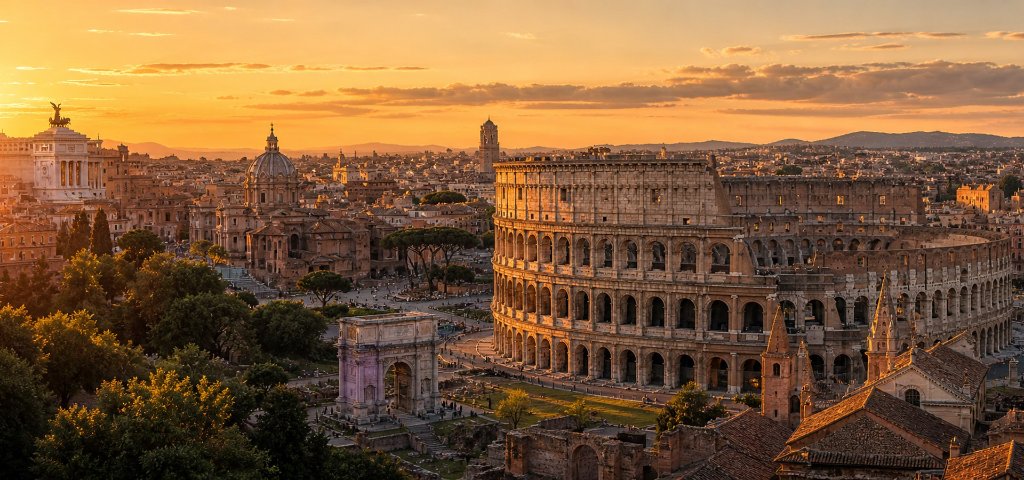
The Western Mediterranean is the most popular cruise circuit in the world, and with reason: from Barcelona or Civitavecchia (Rome's port) the ship reaches a major cultural capital almost every morning. Classic seven-night itineraries alternate Barcelona's Gaudí architecture, Marseille and Provençal villages or Nice, Naples with Pompeii and Capri, and Rome itself — the Colosseum within an hour of the pier. Palma de Mallorca and Tunis appear on longer versions. The sea is warm from May to October, with May–June and September–October the sweet spots: warm enough to swim, without the July-August crowds and heat. For Iranian travellers it is our flagship Schengen route, with Persian-speaking group departures all season.
Eastern Mediterranean
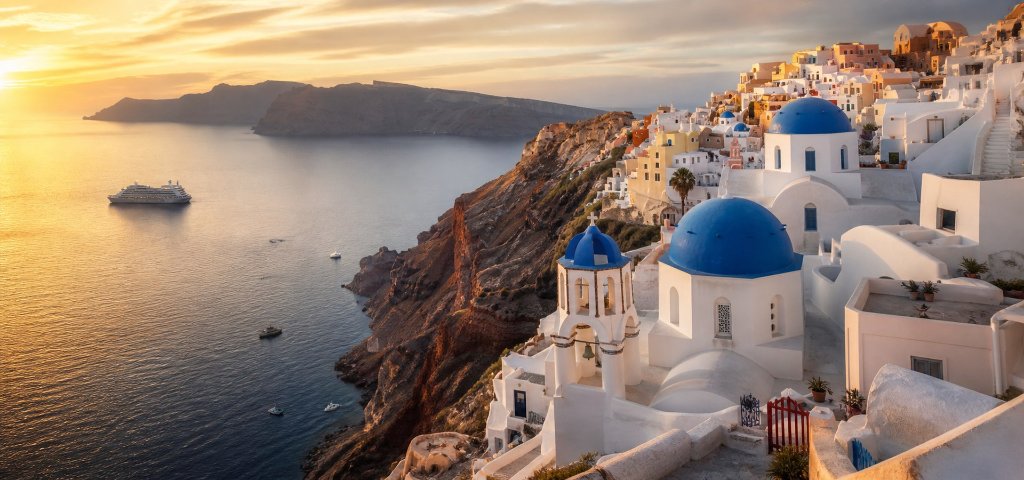
The Eastern Mediterranean is the circuit of ancient empires: Athens, Istanbul, the Greek islands and the Adriatic's walled cities in one week. Typical sailings from Athens (Piraeus), Venice or Civitavecchia call at Mykonos and Santorini's white-and-blue caldera villages, Kotor — a fjord-like bay ending beneath medieval walls — Dubrovnik's Game of Thrones old town, and often Istanbul's skyline of minarets and the Bosphorus. Turkey is visa-free for Iranian passport holders, making this route uniquely easy on paperwork. The season runs April to October; May and September offer the warmest water with the fewest crowds. Island calls are tender ports — small boats, early mornings, unforgettable light.
Central Mediterranean
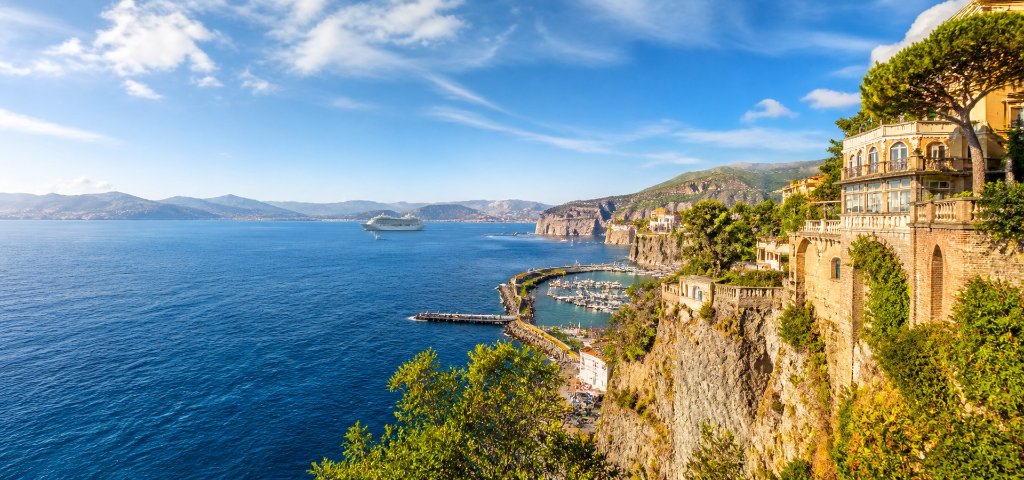
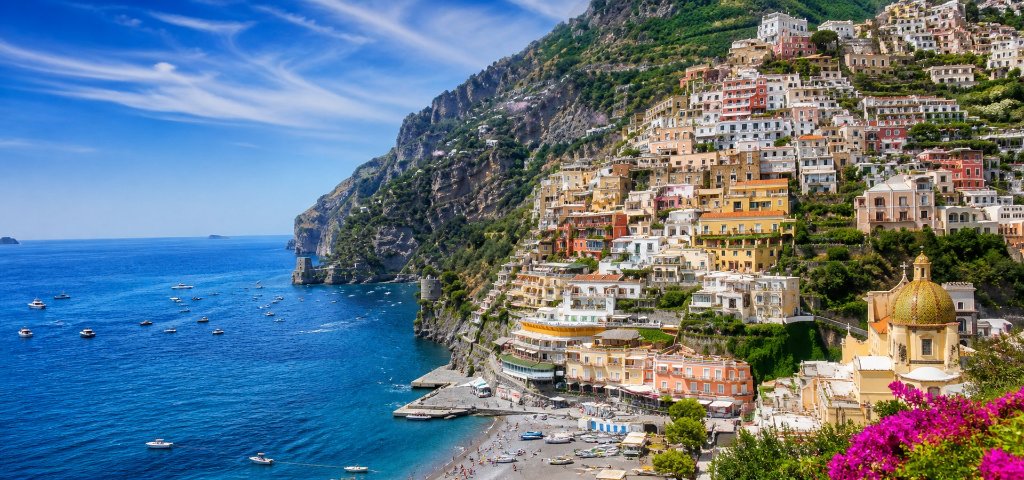
The Central Mediterranean is Italy's own theatre: sailings from Civitavecchia, Genoa or Naples through the islands and cliffs between Rome and Sicily. Signature calls include the Amalfi Coast's vertical villages — Positano and Amalfi reached by ferry or coastal road — Sicily's Taormina above Mount Etna, Palermo's street-food markets, Sardinia's Costa Smeralda beaches, and Malta's honey-stone capital Valletta. Itineraries run seven to twelve nights, usually paired with two days in Rome or Florence before embarkation. The sea is at its best June to September, though May and October are pleasant and calmer. Pair this route with a Schengen visa and our pre-cruise city packages for the complete Italy experience.
Northern Europe
Northern Europe sailings swap sun for long summer light: departures from Copenhagen, Hamburg, Southampton or Amsterdam through Scandinavia and the North Sea world. Classic routes call at Oslo with its fjord-side opera house, Helsinki's design district, Tallinn's fairy-tale medieval walls, and Stockholm — spread across fourteen islands — often wrapped into an 11-to-14-night Baltic capitals voyage. Flatter days visit Warnemünde for Berlin, or Bruges via Zeebrugge. The season is strictly May to September: days stretch past 17 hours in June, the light itself is the attraction. Iranian travellers need the same single Schengen visa as the Mediterranean routes, and October's shoulder weeks offer the season's best fares.
Norwegian Fjords
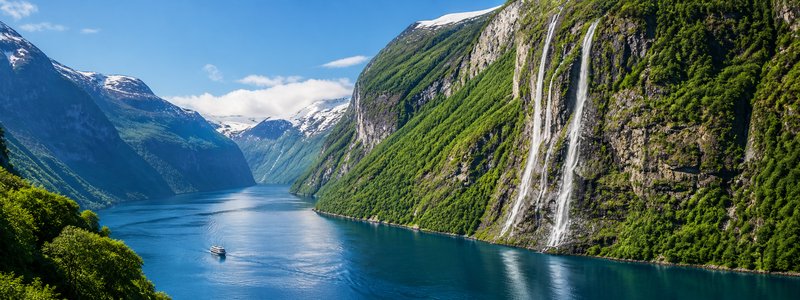
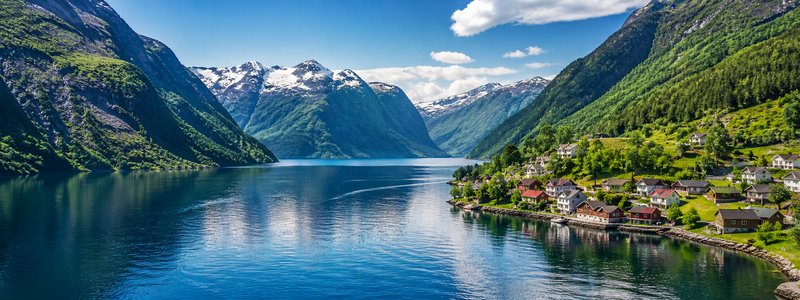
The Norwegian fjords are Europe's most spectacular scenery, and only a ship sees them properly: deep, mirror-still inlets carved between kilometre-high cliffs, waterfalls dropping 400 metres beside the deck. Seven-to-nine-night sailings from Bergen, Copenhagen or Southampton work their way up the coast to Geiranger — the Unesco-listed fjord of the seven sisters waterfall — Flåm's mountain railway, Ålesund's art-nouveau waterfront and Tromsø inside the Arctic Circle on longer versions. Season is May to September with June and July the sunniest; late sailings catch the first northern lights. Days are cool (10–18°C) — pack layers. Iranian travellers use the same Schengen visa; balcony cabins are the wisest money here.
Baltic Sea
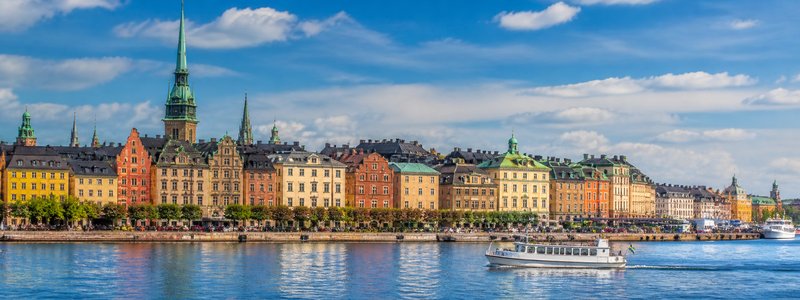
The Baltic Sea itinerary is a castle-and-capital tour compressed into eleven days: a full loop of Europe's northern medieval coastline, usually from Copenhagen or Stockholm. The route strings together Berlin (via Warnemünde), Helsinki, Tallinn's UNESCO old town, Stockholm's Gamla Stan island, Riga's art-nouveau streets, and — the crown call — St. Petersburg on Russian-language routes, or Klaipėda and Gdańsk on EU-only versions. Ports sit close together, so sea days are few and city days dense. Season is June to August only, when the Baltic's light is soft and endless. One Schengen visa covers the entire loop, making it one of the simplest multi-country journeys a cruise can offer.
Atlantic Europe
Atlantic Europe is the quieter, western wing of European cruising: departures from Southampton, Lisbon or Bilbao along a coastline of maritime trade, port wine and Celtic myth. Signature calls include Lisbon's hillside trams and Belém Tower, Porto's port-wine cellars on the Douro, Bilbao's Guggenheim, La Coruña's Roman lighthouse — the world's oldest working one — and the green estuaries of Galicia. Long versions continue to the Channel Islands and Ireland's Cork and Cobh. Weather is the Atlantic's own: mild rather than hot, breezes rather than calm, best from May to September. It is a route for returning cruisers who have done the Mediterranean and want Europe's working, salty edge instead.
British Isles
The British Isles circuit wraps the UK and Ireland's dramatic coastline into an eight-to-twelve-day loop, usually from Southampton or Dublin. Classic calls span Edinburgh's castle via Leith, the Highland lochs of Invergordon, Belfast's Titanic quarter, Dublin's literary pubs, Liverpool's docks, and the rugged Penzance or Isles of Scilly in the southwest. Weather stays crisp even in August — pack layers and embrace it; the green comes from somewhere. The season is May to September, with June giving the longest light. Entry depends on nationality: UK and Ireland have separate visa regimes, so Iranian travellers should plan both — our team maps the exact ports to the exact paperwork before booking.