Transatlantic
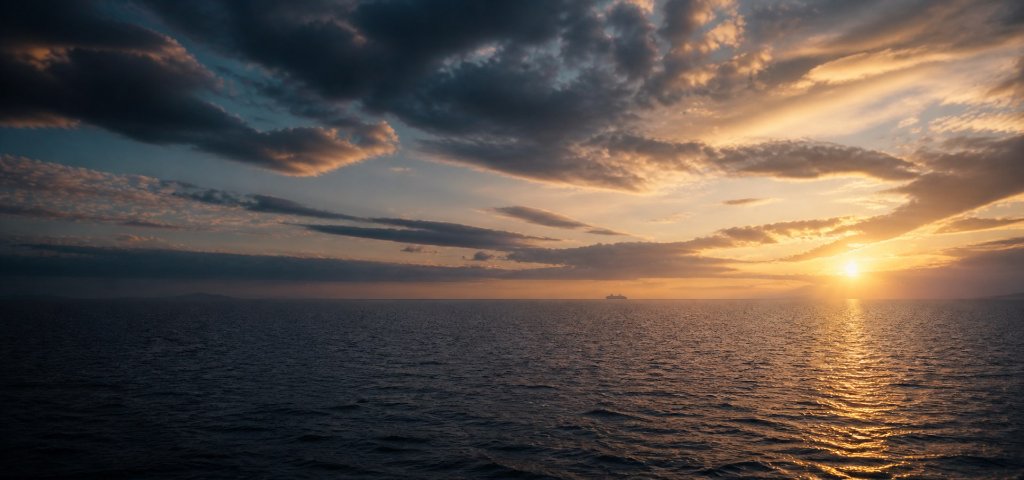
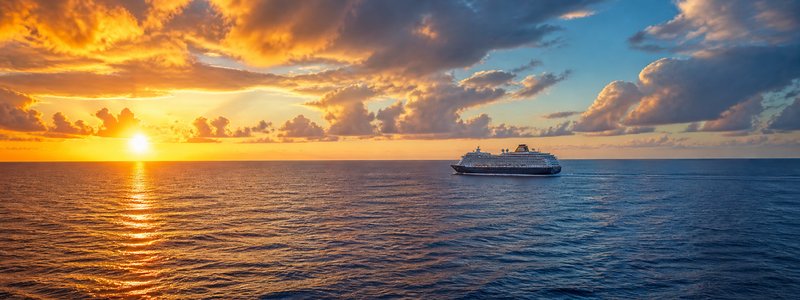
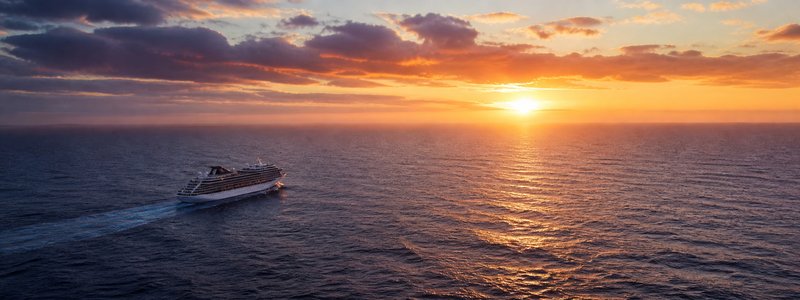
The transatlantic crossing is the original cruise: seven days of open ocean between Europe and the Caribbean or North America, following the trade winds the way the liners always did. Repositioning sailings each spring and autumn move ships between seasonal homes — Mediterranean to Fort Lauderdale, Southampton to New York — and cost a fraction of the equivalent land holiday per night. Days at sea are the product: libraries, planetariums, five-course dinners, deck walking with nothing but horizon. QM2's westbound/eastbound tandem between Southampton and New York keeps the scheduled-line tradition alive. Visas hinge on both endpoints and any intermediate ports — usually just one or two documents for the whole crossing.
Transpacific
The transpacific crossing is the longest regular ocean voyage in commercial cruising: 16 to 30 days spanning the planet's largest ocean, typically when ships reposition between Alaska or North America and Asia each spring and autumn. After departure from Seattle, Vancouver, Yokohama or Singapore, the itinerary stretches into five-to-seven-day open-water legs — sleeping, reading, eating and exercising while the map's land masses retreat to the edges. Calls, when they come, are rewards: Honolulu, Majuro, Osaka, Hong Kong. Fares per night are among cruising's lowest and cabins are simple to upgrade. This is the sailing for travellers who measure luxury in uninterrupted sea days, not in ports per week.
Transafrica
Transafrica sailings trace Africa's two ocean edges in one extended voyage: usually 20 to 35 nights moving between Europe, the Indian Ocean islands and round-Africa or West African circuits. The Atlantic leg calls at the Canary Islands, Dakar and Namibia's Skeleton Coast; the Indian Ocean leg threads Réunion, Mauritius, Madagascar and Mozambique. Ports are diverse, distances are long and sea days frequent — a true voyage in the 19th-century sense, with the comfort of a modern ship. Departures cluster in the October-to-April window when both ocean sides enjoy dry seasons. For travellers with time and a stack of visas, transafrica is the continent seen from the water's edge, uninterrupted.
Transamerica
A transamerica voyage circles or threads the two Americas in one epic sailing: 30 to 60 nights calling from Canada's maritime provinces, down the US East Coast, through the Caribbean and Panama Canal, and along Mexico's Pacific coast to Alaska or the west coast ports. Season dictates direction — southbound in autumn, northbound in spring — and the itinerary doubles as a grand tour of the hemisphere's contrasting coastlines: Acadian lighthouses, Caribbean reefs, colonial plazas and glacier-carved channels in one continuous voyage. Passengers tend to be seasoned cruisers and long-haul travellers; visas stack up with the port list, which our team maps in detail before you commit.
Transasia
Transasia itineraries string the continent's maritime rim into one long voyage: 25 to 50 nights from the Persian Gulf through India, Sri Lanka, the Maldives, Southeast Asia and up to East Asia — or the reverse in spring. Port density is remarkable: Mumbai's Gateway, Cochin's backwaters, Colombo, Phuket, Singapore, Ho Chi Minh City, Hong Kong, Shanghai and Japan appear across a single sailing. Two climate zones are crossed, so departure months matter: autumn sailings run west-to-east ahead of the northeast monsoon, spring sailings run the reverse. For Iranian travellers it is the one grand voyage reachable almost entirely on e-visas and visa-on-arrival — the paperwork is the easiest of any world-scale route.
Transorient
The transorient leg connects Europe to Asia the long way — via the Suez Canal, the Red Sea, the Indian Ocean and Southeast Asia — in voyages of 25 to 45 nights that reposition ships between Mediterranean summers and Asian winters. The passage itself is the story: a daylight transit of the Suez Canal, two days across the Red Sea's biblical coastlines, calls at Salalah, Colombo or Phuket, and the long final approach through the Strait of Malacca into Singapore. Sea days alternate with genuinely exotic ports; the fare per night stays among the lowest in cruising. It is the historic route of the great liners, sailed today in five-star quiet.
World Tour
The world cruise is the summit of the category: 100 to 180 nights circumnavigating the globe, calling at 30 to 50 ports across five to seven continents in a single voyage. Itineraries typically leave Europe or North America in January, ride the trade-wind belt westward through the Caribbean, the South Pacific, Australia, Southeast Asia, the Indian Ocean, the Red Sea and the Mediterranean before returning home in spring. Segments of 15 to 40 nights can be booked separately for travellers who cannot take the full run. Everything is planned around you — same cabin, same table, same crew for months. Visas, laundry, dentists and birthdays are all handled onboard. Prices per night undercut luxury hotels; the experience has no equivalent on land.